For the best experience, this project uses the Webflow Input Enhancer extension. We highly recommend installing it. Click here to download (use preview mode to access link)
AI Threat Landscape report 2025
Scan and validate every AI model
Identify malware, vulnerabilities, backdoors, and integrity issues in proprietary, open source, and vendor models.
Trusted by Industry Leaders
AI supply chain risk is growing
Organizations increasingly adopt open source or third party models, many of which contain unknown components, vulnerabilities, or malicious artifacts.
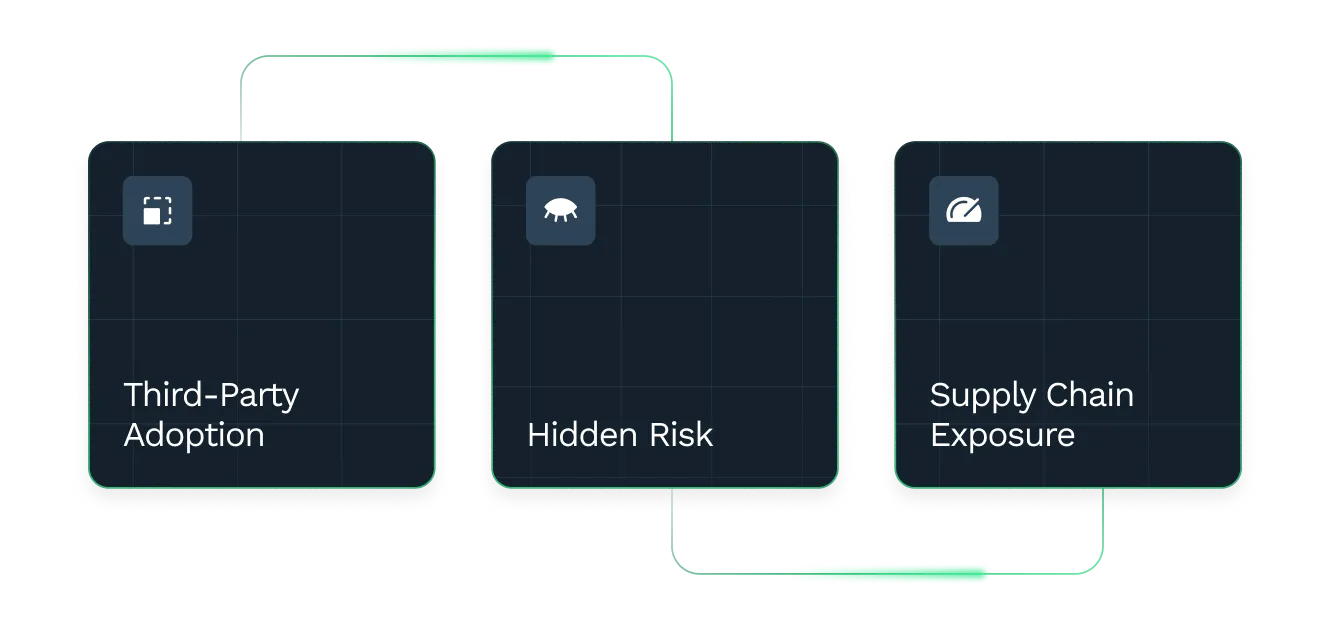
Open source models may hide malicious code
Attackers embed backdoors or malware inside model files that evade traditional scanning tools.
Inherited vulnerabilities increase exposure
Reused model components or transfer learning can unintentionally import known CVEs or corrupt layers.
Comprehensive scanning for model safety
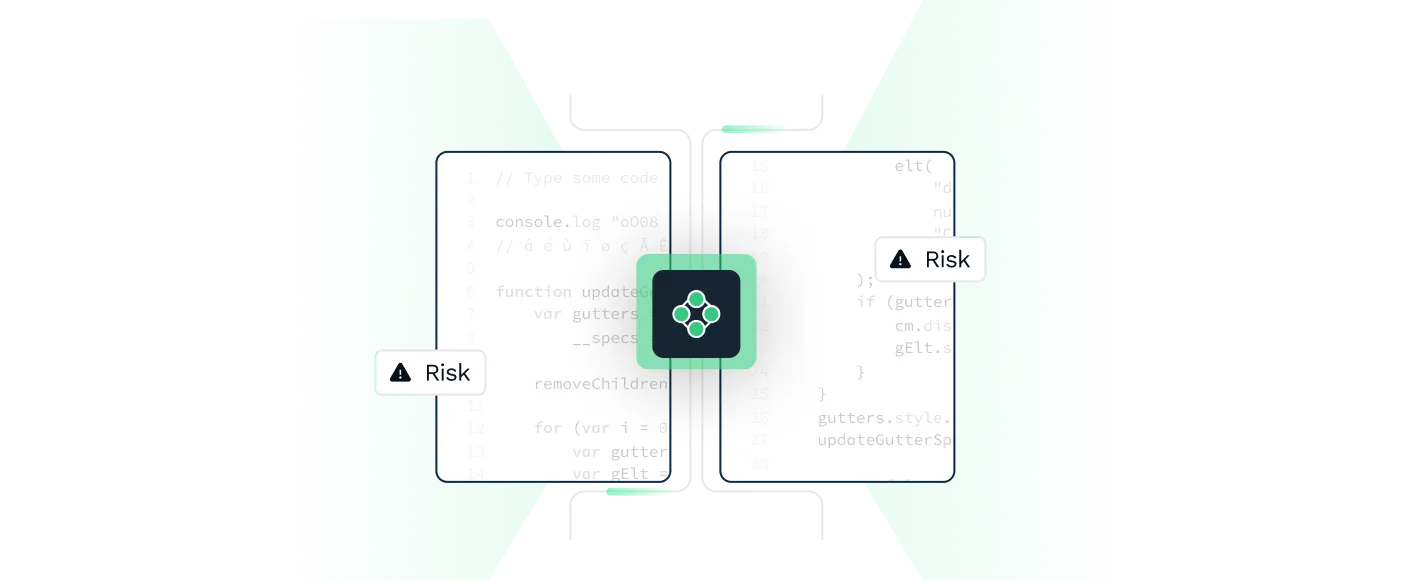
Malware and Exploit Detection
Identify malicious code inside model files that may serve as infection vectors.
Vulnerability Assessment
Detect CVEs and zero day vulnerabilities present in dependencies or embedded components.

Model Integrity and Genealogy
Analyze layer structure, tensors, and lineage to detect corruption or inherited risks.
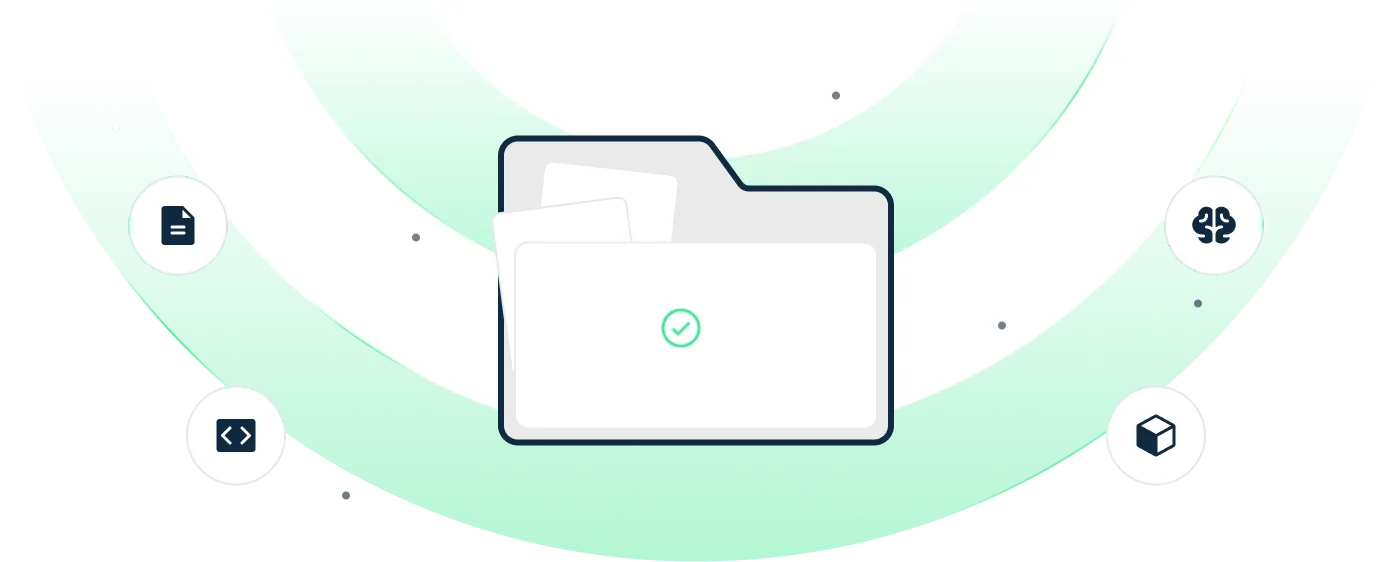
Generate a standards based inventory of all model components for compliance and audit readiness.
Benefits
Ensure trust in every model you deploy
Protect your model lifecycle with deep supply chain insights.
Secure open source and vendor models
Scan URLs directly from model hubs.
Prevent inherited vulnerabilities
Avoid pulling unsafe components into production.
Improve proprietary model integrity
Detect corruption across layers and tensors.
Maintain regulatory compliance
Generate model component inventories required for audits.
Protect intellectual property
Ensure your models are safe, intact, and production ready.
The Data Backs Us Up
75
%
+
Reduction in exposure to AI exploits
50
+
𝘊𝘝𝘌𝘴
Disclosed through our security research
25
%
+
Issued patents
"One of the elements that impresses me about HiddenLayer is the elegance of their technology. Their non-invasive AIDR solution provides robust, real-time protection against adversarial attacks without ever needing to access a customer's sensitive data or proprietary models. This is a game-changer for enterprises in regulated industries like finance and healthcare, as well as federal agencies, where data privacy is paramount."
Doug Merritt Chairman
CEO & President at Aviatrix and prior CEO at Splunk
"AI security demands purpose-built technology and trusted partners to counter AI attack vectors. HiddenLayer arms CISOs with a comprehensive platform to identify and manage AI-specific risks, enabling organizations to innovate with confidence and at the speed of modern business."
Josh Lemos
CISO, GitLab
"AI introduces risks that traditional cybersecurity tools weren't built to handle. HiddenLayer's comprehensive platform consolidates what CISOs need to manage and defend the critical AI tools that enable the business."
Timothy Youngblood
CISO in Residence, Astrix Security
"The integrity of AI systems is as critical as the integrity of our software supply chains. If we can't secure the building blocks of AI, we risk exposing enterprises to new classes of attack. HiddenLayer is tackling this problem at its root, delivering the protections the world needs most."
Thomas Pace
Co-Founder & CEO, NetRise
"Strong governance is critical as AI becomes embedded across enterprises. HiddenLayer provides the comprehensive framework needed to manage risk and align AI adoption with visibility, compliance, and accountability."
Gary McAlum
Prior CISO, AIG
"Securing AI requires protection across the entire lifecycle. HiddenLayer delivers end-to-end visibility and defense so CISOs can safeguard AI at every stage."
Jerry Davis
Founder, Gryphon X
"As enterprises embrace AI, security can’t be an afterthought. HiddenLayer makes it possible for CISOs to lead with confidence and keep innovation secure."
Tomas Maldonado
CISO, NFL
Resources
Learn from the Industry’s AI Security Experts
Research, guidance, and frameworks from the team shaping AI security standards.

insights
XX
min read
Integrating HiddenLayer’s Model Scanner with Databricks Unity Catalog
As machine learning becomes more embedded in enterprise workflows, model security is no longer optional. From training to deployment, organizations need a streamlined way to detect and respond to threats that might lurk inside their models. The integration between HiddenLayer’s Model Scanner and Databricks Unity Catalog provides an automated, frictionless way to monitor models for vulnerabilities as soon as they are registered. This approach ensures continuous protection without slowing down your teams.
Introduction
As machine learning becomes more embedded in enterprise workflows, model security is no longer optional. From training to deployment, organizations need a streamlined way to detect and respond to threats that might lurk inside their models. The integration between HiddenLayer’s Model Scanner and Databricks Unity Catalog provides an automated, frictionless way to monitor models for vulnerabilities as soon as they are registered. This approach ensures continuous protection without slowing down your teams.
In this blog, we’ll walk through how this integration works, how to set it up in your Databricks environment, and how it fits naturally into your existing machine learning workflows.
Why You Need Automated Model Security
Modern machine learning models are valuable assets. They also present new opportunities for attackers. Whether you are deploying in finance, healthcare, or any data-intensive industry, models can be compromised with embedded threats or exploited during runtime. In many organizations, models move quickly from development to production, often with limited or no security inspection.
This challenge is addressed through HiddenLayer’s integration with Unity Catalog, which automatically scans every new model version as it is registered. The process is fully embedded into your workflow, so data scientists can continue building and registering models as usual. This ensures consistent coverage across the entire lifecycle without requiring process changes or manual security reviews.
This means data scientists can focus on training and refining models without having to manually initiate security checks or worry about vulnerabilities slipping through the cracks. Security engineers benefit from automated scans that are run in the background, ensuring that any issues are detected early, all while maintaining the efficiency and speed of the machine learning development process. HiddenLayer’s integration with Unity Catalog makes model security an integral part of the workflow, reducing the overhead for teams and helping them maintain a safe, reliable model registry without added complexity or disruption.
Getting Started: How the Integration Works
To install the integration, contact your HiddenLayer representative to obtain a license and access the installer. Once you’ve downloaded and unzipped the installer for your operating system, you’ll be guided through the deployment process and prompted to enter environment variables.
Once installed, this integration monitors your Unity Catalog for new model versions and automatically sends them to HiddenLayer’s Model Scanner for analysis. Scan results are recorded directly in Unity Catalog and the HiddenLayer console, allowing both security and data science teams to access the information quickly and efficiently.
The integration is simple to set up and operates smoothly within your Databricks workspace. Here’s how it works:
Install the HiddenLayer CLI: The first step is to install the HiddenLayer CLI on your system. Running this installation will set up the necessary Python notebooks in your Databricks workspace, where the HiddenLayer Model Scanner will run.
Configure the Unity Catalog Schema: During the installation, you will specify the catalogs and schemas that will be used for model scanning. Once configured, the integration will automatically scan new versions of models registered in those schemas.
Automated Scanning: A monitoring notebook called hl_monitor_models runs on a scheduled basis. It checks for newly registered model versions in the configured schemas. If a new version is found, another notebook, hl_scan_model, sends the model to HiddenLayer for scanning.
Reviewing Scan Results After scanning, the results are added to Unity Catalog as model tags. These tags include the scan status (pending, done, or failed) and a threat level (safe, low, medium, high, or critical). The full detection report is also accessible in the HiddenLayer Console. This allows teams to evaluate risk without needing to switch between systems.
Why This Workflow Works
This integration helps your team stay secure while maintaining the speed and flexibility of modern machine learning development.
No Process Changes for Data Scientists Teams continue working as usual. Model security is handled in the background.
Real-Time Security Coverage Every new model version is scanned automatically, providing continuous protection.
Centralized Visibility Scan results are stored directly in Unity Catalog and attached to each model version, making them easy to access, track, and audit.
Seamless CI/CD Compatibility The system aligns with existing automation and governance workflows.
Final Thoughts
Model security should be a core part of your machine learning operations. By integrating HiddenLayer’s Model Scanner with Databricks Unity Catalog, you gain a secure, automated process that protects your models from potential threats.
This approach improves governance, reduces risk, and allows your data science teams to keep working without interruptions. Whether you’re new to HiddenLayer or already a user, this integration with Databricks Unity Catalog is a valuable addition to your machine learning pipeline. Get started today and enhance the security of your ML models with ease.
report and guide
XX
min read
Securing AI: The Technology Playbook
Lorem ipsum dolor sit amet, consectetur adipiscing elit, sed do eiusmod tempor incididunt ut labore et dolore magna aliqua.
The technology sector leads the world in AI innovation, leveraging it not only to enhance products but to transform workflows, accelerate development, and personalize customer experiences. Whether it’s fine-tuned LLMs embedded in support platforms or custom vision systems monitoring production, AI is now integral to how tech companies build and compete.
This playbook is built for CISOs, platform engineers, ML practitioners, and product security leaders. It delivers a roadmap for identifying, governing, and protecting AI systems without slowing innovation.
Start securing the future of AI in your organization today by downloading the playbook.
webinar
XX
min read
Beating the AI Game, Ripple, Numerology, Darcula, Special Guests from Hidden Layer… – Malcolm Harkins, Kasimir Schulz – SWN #471
Lorem ipsum dolor sit amet, consectetur adipiscing elit, sed do eiusmod tempor incididunt ut labore et dolore magna aliqua.
Heading 1
Heading 2
Heading 3
Heading 4
Heading 5
Heading 6
Lorem ipsum dolor sit amet, consectetur adipiscing elit, sed do eiusmod tempor incididunt ut labore et dolore magna aliqua. Ut enim ad minim veniam, quis nostrud exercitation ullamco laboris nisi ut aliquip ex ea commodo consequat. Duis aute irure dolor in reprehenderit in voluptate velit esse cillum dolore eu fugiat nulla pariatur.