Exposure of sensitive Information allows account takeover
June 9, 2025

Products Impacted
This vulnerability is present in all versions of BackendAI. We tested on version 25.3.3 (commit f7f8fe33ea0230090f1d0e5a936ef8edd8cf9959).
CVSS Score: 8.0
AV:N/AC:H/PR:H/UI:N/S:C/C:H/I:H/A:H
CWE Categorization
CWE-200: Exposure of Sensitive Information
Details
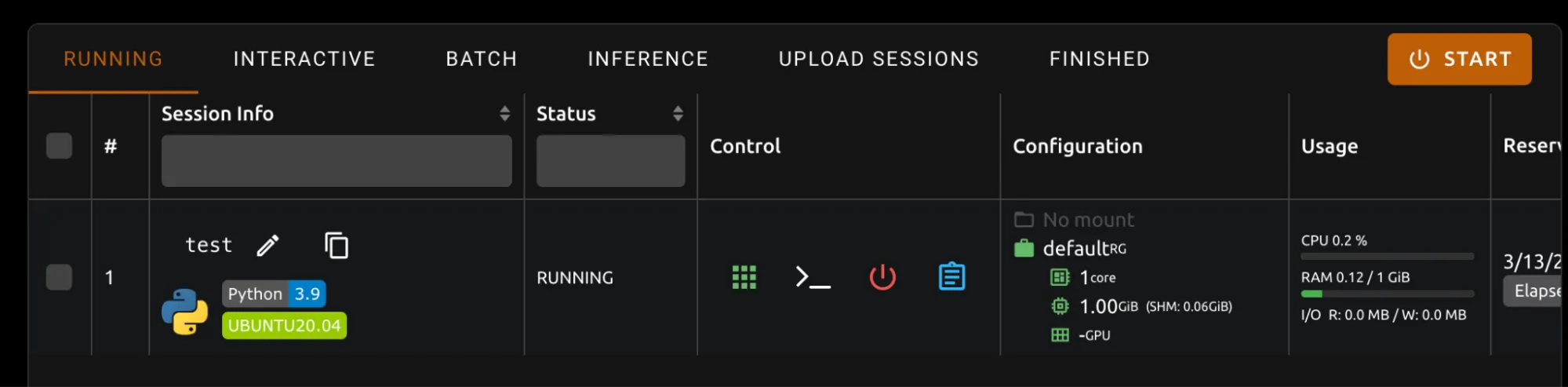
To reproduce this, we started an interactive session
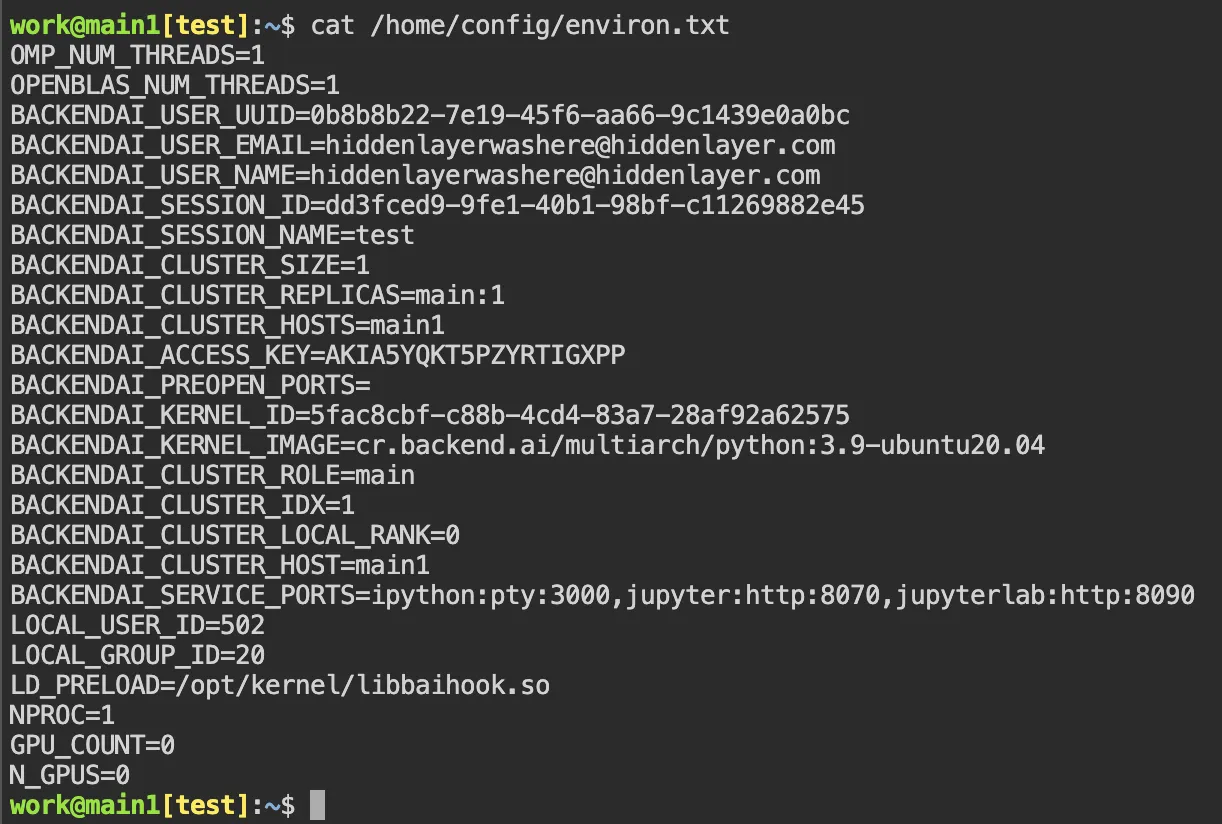
Then, we can read /home/config/environ.txt and read the information.
Timeline
March 28, 2025 — Contacted vendor to let them know we have identified security vulnerabilities and ask how we should report them.
April 02, 2025 — Vendor answered letting us know their process, which we followed to send the report.
April 21, 2025 — Vendor sent confirmation that their security team was working on actions for two of the vulnerabilities and they were unable to reproduce another.
April 21, 2025 — Follow up email sent providing additional steps on how to reproduce the third vulnerability and offered to have a call with them regarding this.
May 30, 2025 — Attempt to reach out to vendor prior to public disclosure date.
June 03, 2025 — Final attempt to reach out to vendor prior to public disclosure date.
June 09, 2025 — HiddenLayer public disclosure.
Project URL
https://github.com/lablup/backend.ai
Researcher: Esteban Tonglet, Security Researcher, HiddenLayer
Researcher: Kasimir Schulz, Director, Security Research, HiddenLayer
Related SAI Security Advisory
September 11, 2026
_READ_ONLY_COMMANDS_POSIX expansion adds 31 commands with no path checking, granting unconditional access to the full host filesystem
Mistral Vibe automatically approves a large set of commands that are not subject to the expected workspace path restrictions, allowing files anywhere on the host to be accessed without user approval.
September 11, 2026
Environment variable prefixes stripped from permission check enable RCE via env injection
Mistral Vibe does not consider environment variable assignments when checking whether a command can run without approval, allowing environment controlled behavior in allowlisted programs such as Git to be abused for arbitrary code execution.