Path Traversal on File Download
February 6, 2024

Our second vulnerability is a directory traversal inside the Datasets class within the _download_external_files method. An attacker can upload or modify a dataset containing a link pointing to a file they want to drop and the path they want to write it to on the user’s system. When a user interacts with this dataset, it triggers the download, such as when using the Dataset.squash method. The uploaded file will be written to the user’s file system at the attacker-specified location. An important note is that the external link can point to a local file by using file://, the implication being that this introduces the potential for sensitive local files to be moved to externally accessible directories.
ClearML Server
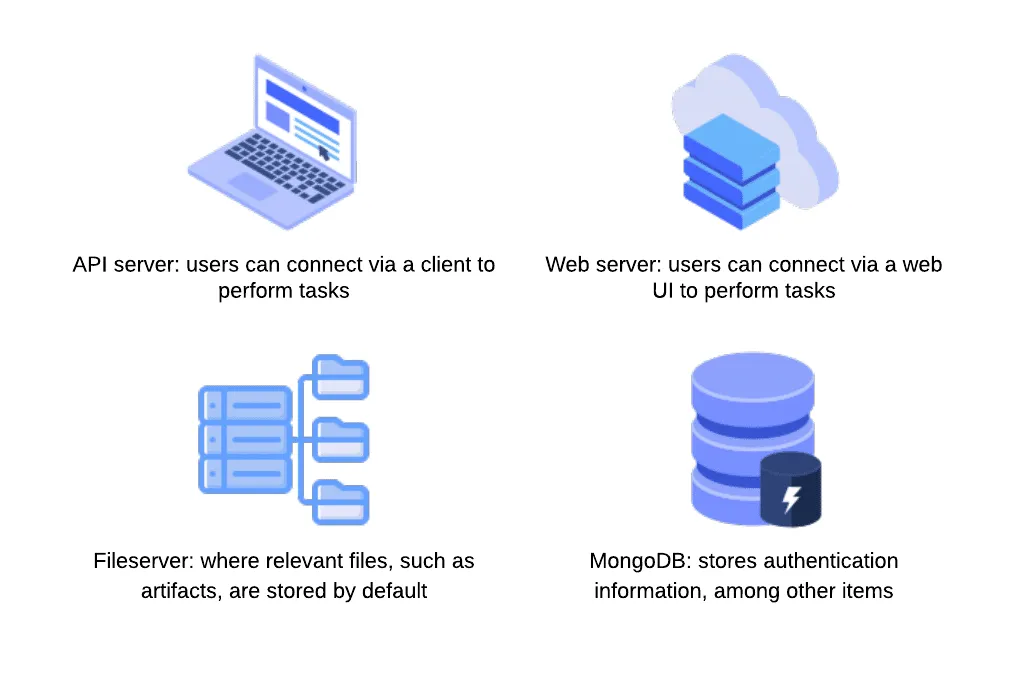
The ClearML Server is a central hub for managing projects, datasets, tasks, and more. It consists of multiple components, including an API server that users can connect to via a client to perform tasks; a web server that users can connect to via a web UI to perform tasks; a fileserver where relevant files, such as artifacts and models, are stored by default; and a MongoDB instance, that stores authentication information, among other items.
Related SAI Security Advisory
September 11, 2026
_READ_ONLY_COMMANDS_POSIX expansion adds 31 commands with no path checking, granting unconditional access to the full host filesystem
Mistral Vibe automatically approves a large set of commands that are not subject to the expected workspace path restrictions, allowing files anywhere on the host to be accessed without user approval.
September 11, 2026
Environment variable prefixes stripped from permission check enable RCE via env injection
Mistral Vibe does not consider environment variable assignments when checking whether a command can run without approval, allowing environment controlled behavior in allowlisted programs such as Git to be abused for arbitrary code execution.